In the serene, palm-fringed shalas of ADDA YOGA Bali, we often speak of Pranayama—the ancient yogic art of breath control. While many guests arrive seeking a spiritual "reset," there is a profound, biological shift happening beneath the surface. At ADDA YOGA, we believe that spiritual practices shouldn't require blind faith. Breathwork isn't just a trend; …

In the serene, palm-fringed shalas of ADDA YOGA Bali, we often speak of Pranayama—the ancient yogic art of breath control. While many guests arrive seeking a spiritual “reset,” there is a profound, biological shift happening beneath the surface. At ADDA YOGA, we believe that spiritual practices shouldn’t require blind faith.
Breathwork isn’t just a trend; it is a physiological hack for your nervous system. If you struggle with anxiety, understanding the “why” behind the breath can be the first step toward reclaiming your peace.
The Biological Bridge: How Breath Affects the Brain

To understand how breathwork heals anxiety, we must look at the Autonomic Nervous System (ANS). The ANS is divided into two main branches:
- The Sympathetic Nervous System (SNS): The “Fight or Flight” response. In cases of chronic anxiety, this system is perpetually overstimulated.
- The Parasympathetic Nervous System (PNS): The “Rest and Digest” response. This is the state where healing, cellular repair, and emotional regulation occur.
The Power of the Vagus Nerve
The secret weapon of every ADDA YOGA breathwork session is the Vagus Nerve. This is the longest cranial nerve in the body, acting as a bidirectional “data highway” between the brain and the organs.
When you engage in deep, diaphragmatic breathing, you physically stimulate the Vagus nerve. Research published in Frontiers in Psychology suggests that this stimulation sends an immediate signal to the brain that the environment is safe, effectively “switching off” the anxiety response in the amygdala.
Ancient Wisdom, Modern Validation
At ADDA YOGA Bali, our facilitators combine traditional Pranayama with contemporary breathwork techniques. Science now validates what yogis have known for millennia:
1. Coherent Breathing and Heart Rate Variability (HRV)
Coherent breathing involves inhaling and exhaling for equal counts (usually 5–6 seconds each). This practice maximizes Heart Rate Variability (HRV)—a key marker of physical resilience and emotional health. A higher HRV is scientifically linked to lower levels of cortisol (the stress hormone) and increased emotional regulation.
2. The CO2 Tolerance Factor
Anxiety often leads to “over-breathing” or chronic hyperventilation, which flushes too much Carbon Dioxide (CO2) from the blood. Contrary to popular belief, we need CO2 to release oxygen into our tissues (The Bohr Effect). Our expert-led sessions teach you how to build CO2 tolerance, which calms the brain’s “suffocation alarm” and reduces panic attack frequency.
Why Choose ADDA YOGA Bali for Your Breathwork Journey?
In a saturated wellness market, trustworthiness is paramount. At ADDA YOGA, we don’t just “lead a class”; we hold a professional, trauma-informed container.
- Evidence-Based Protocols: Our sequences are designed based on respiratory physiology to ensure safety and efficacy.
- Expert Facilitators: Our team consists of seasoned practitioners who understand the contraindications of certain techniques (such as Breath of Fire or Holotropic-style breathing).
- Safe Environment: We provide a sanctuary where your physiological and emotional safety is our highest priority, allowing you to go deeper into the practice.
Holistic Benefits: What Happens to Your Body?
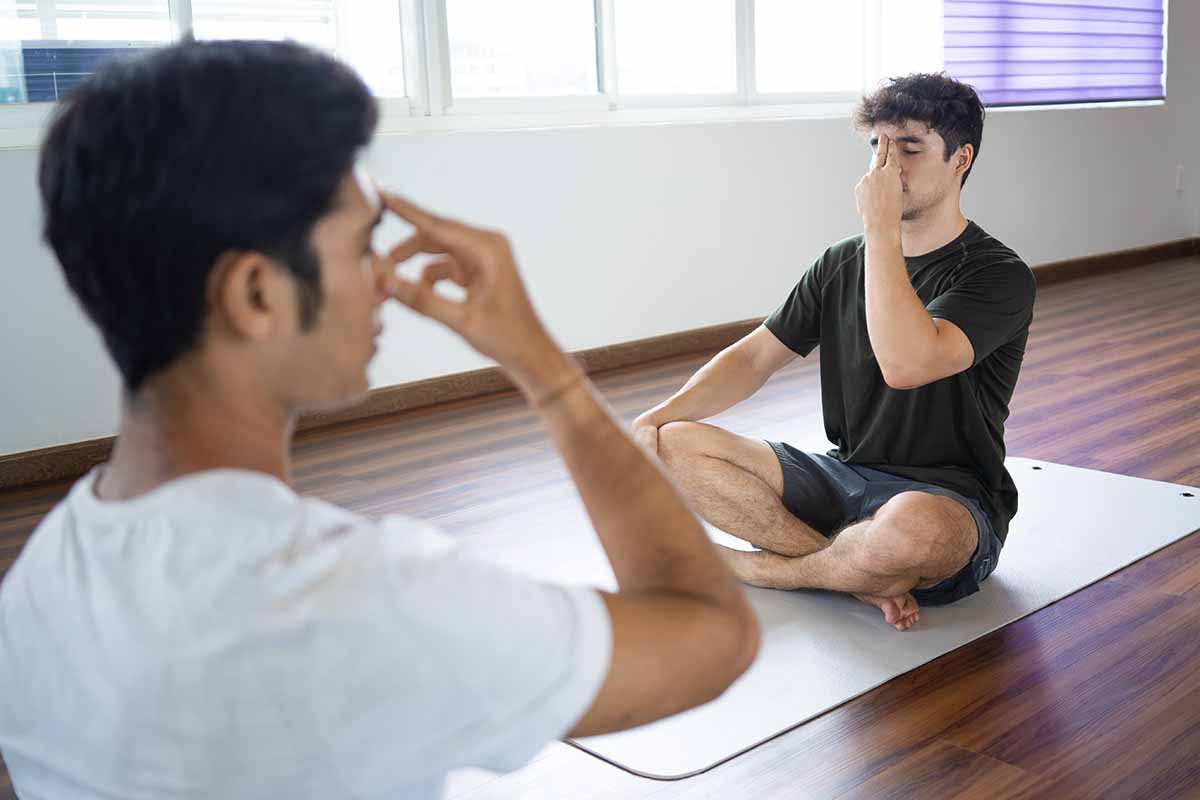
When you commit to a consistent breathwork practice at our Ubud studio, you aren’t just “relaxing.” You are physically re-wiring your stress response:
- Reduction in Cortisol: Regular practice lowers systemic inflammation and stress hormone levels.
- Improved Sleep Quality: By toning the Parasympathetic nervous system before bed, you move from “tired and wired” to deep, restorative sleep.
- Enhanced Focus: Breathwork clears “brain fog” by balancing the oxygen-to-carbon dioxide ratio in the blood.
- Emotional Resilience: You learn to sit with discomfort, teaching your brain that you can handle intense sensations without spiraling into a panic.
Integrating Breathwork into Your Daily Life
Our mission at ADDA YOGA is to give you tools that last long after you leave Bali. You can begin regulating your nervous system today with this simple, science-backed technique:
The 4-7-8 Technique (The Natural Tranquilizer)
- Inhale through the nose for 4 seconds.
- Hold the breath for 7 seconds.
- Exhale forcefully through the mouth (making a “whoosh” sound) for 8 seconds.
The long exhale is the critical component here; it forces the heart rate to slow down and activates the Vagus nerve almost instantly.
FAQ: What People Are Asking About Breathwork and Science
- How long does it take for breathwork to reduce anxiety? Physiologically, you can feel a shift in your nervous system in as little as 90 seconds. However, clinical studies show that consistent practice (10–20 minutes daily) leads to long-term changes in brain structure, specifically shrinking the size of the amygdala (the brain’s fear center).
- Is breathwork safe for people with clinical anxiety or PTSD? Yes, but it should be approached with a “trauma-informed” lens. At ADDA YOGA, we recommend starting with grounding, gentle techniques rather than high-intensity, “cathartic” breathwork, which can sometimes be overstimulating for a sensitive nervous system.
- Can breathwork replace anti-anxiety medication? Breathwork is a powerful complementary tool, but it should never replace medical advice or prescribed medication without consulting your doctor. Many of our students find it reduces their need for “as-needed” rescue medications by lowering their baseline stress levels.
- What is the difference between Pranayama and modern Breathwork? Pranayama is a broad Sanskrit term meaning “extension of the prana (life force).” Modern Breathwork often focuses on specific physiological outcomes (like alkalizing the blood or Vagal toning). At ADDA YOGA, we blend both to offer a practice that is spiritually fulfilling and scientifically sound.
- Why do I feel tingly or lightheaded during deep breathing? This is known as paresthesia. It happens because rapid or deep breathing changes the pH balance of your blood (becoming more alkaline). Under the guidance of our expert facilitators, this is a safe and temporary sensation that often leads to a state of profound relaxation.
Experience the Science of Stillness
Anxiety can make you feel like a passenger in your own body. Breathwork puts you back in the driver’s seat. By understanding the biological mechanics of the breath, you move from “trying to relax” to biologically enforcing relaxation.
Join us at ADDA YOGA Bali to experience the perfect synergy of ancient ritual and modern science. Whether you are a skeptic or a seeker, your nervous system will thank you.
Check our wellness and spiritual events in Bali, Canggu : Sound healing, Cacao ceremony, Kundalini activation , Reiki, Full moon ceremonies, Kirtan , breathwork , and much more !
Website: www.addayogabali.com
Contact: addaflowyoga@gmail.com
Address (Studio): Jl. Kayu Manis, Canggu, Kec. Kuta Utara, Kabupaten Badung, Bali 80351