For many, the word "Yoga" immediately conjures images of graceful asanas—the physical postures we see on Instagram or practice in a studio. However, as any seasoned practitioner will tell you, the physical practice is only one branch of a much larger tree.If you are considering a deeper immersion, such as a Yoga Teacher Training (YTT) …
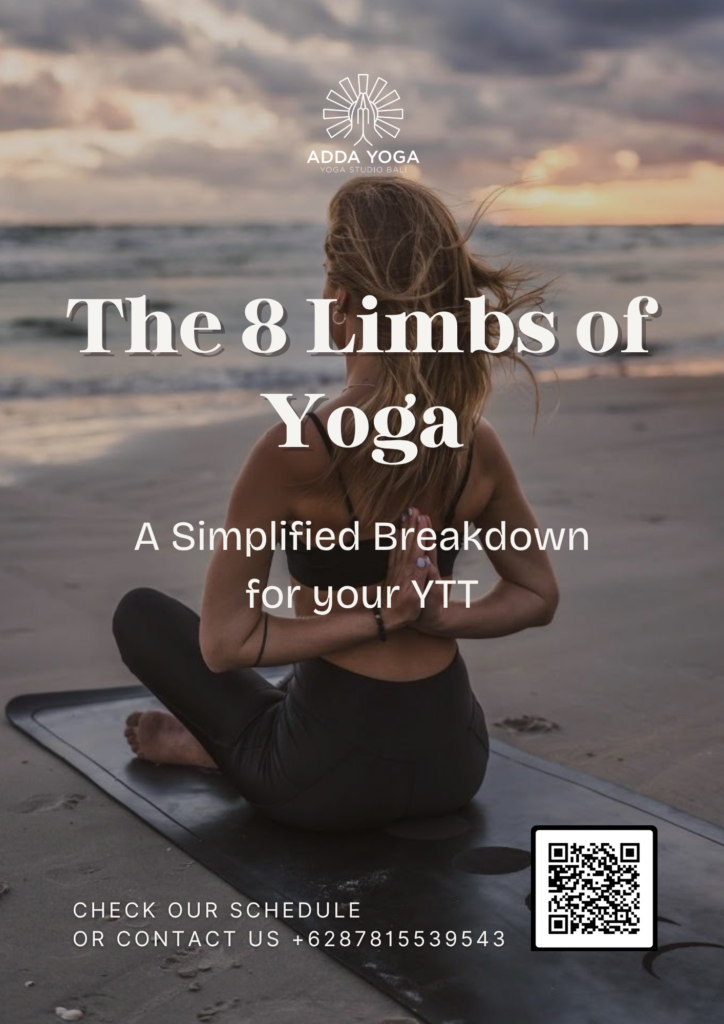
For many, the word “Yoga” immediately conjures images of graceful asanas—the physical postures we see on Instagram or practice in a studio. However, as any seasoned practitioner will tell you, the physical practice is only one branch of a much larger tree.
If you are considering a deeper immersion, such as a Yoga Teacher Training (YTT) or a dedicated retreat in Bali, understanding the 8 Limbs of Yoga (known as Ashtanga in Sanskrit) is the key to moving beyond the physical and into a truly holistic lifestyle. These guidelines, first codified by the sage Patanjali in the Yoga Sutras, offer a structural framework for a meaningful and purposeful life.
At ADDA YOGA Bali, we believe that clarity is the first step toward mastery. Before you roll out your mat for a deep dive into the philosophy of the East, let’s simplify these eight profound pillars of wisdom.
1. Yamas: Our Ethical Standards
The Yamas are the first limb and represent our ethical “restraints.” They focus on our behavior and how we conduct ourselves in the world. Think of them as a moral compass that helps us live in harmony with others.
- Ahimsa (Non-violence): Beyond physical harm, this includes practicing kindness toward ourselves—crucial when navigating the physical challenges of a tropical YTT.
- Satya (Truthfulness): Living and speaking your truth with compassion.
- Asteya (Non-stealing): Not just taking physical objects, but also not “stealing” someone’s time or energy.
- Brahmacharya (Right use of energy): Directing our life force toward our higher purpose and moderation in all things.
- Aparigraha (Non-possessiveness): Letting go of attachments and the “need” for specific outcomes in our practice.
2. Niyamas: Personal Observances
While the Yamas focus on the outer world, the Niyamas are about our inner environment. These are the self-disciplines that build a strong foundation for spiritual growth.
- Saucha (Cleanliness): Purity of body, mind, and even our physical surroundings, like keeping a clean shala.
- Santosha (Contentment): Practicing gratitude for what we have in the present moment, rather than constantly seeking more.
- Tapas (Self-discipline): The “heat” or fire that drives us to stay committed to our practice, even when it gets difficult.
- Svadhyaya (Self-study): The intentional examination of our thoughts, habits, and the sacred texts.
- Ishvara Pranidhana (Surrender): Acknowledging a higher power or a sense of oneness with the universe.
3. Asana: The Physical Posture
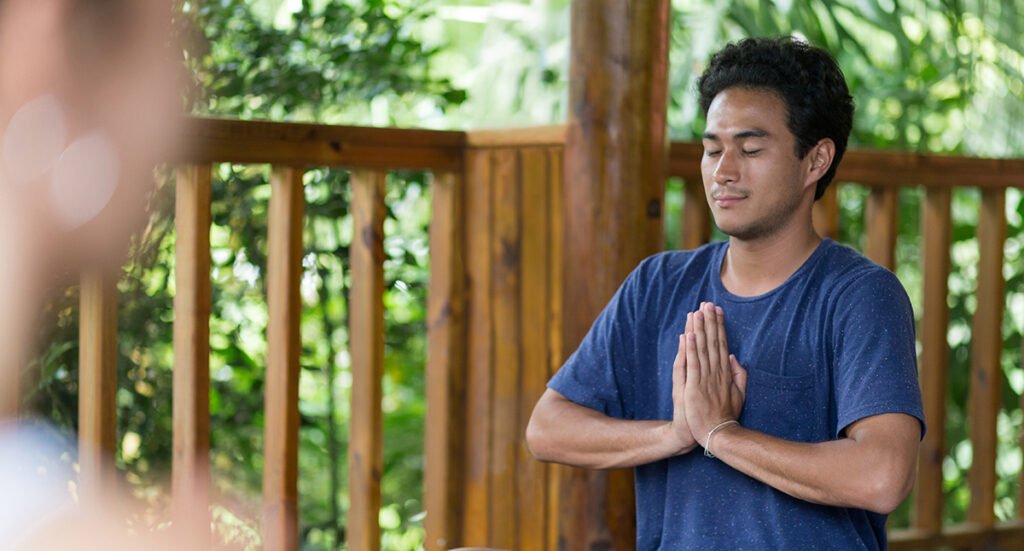
This is the limb most people are familiar with. In the original context of the Yoga Sutras, Asana referred specifically to the seated posture for meditation. Patanjali stated that the posture should be Sthira steady and Sukha comfortable.
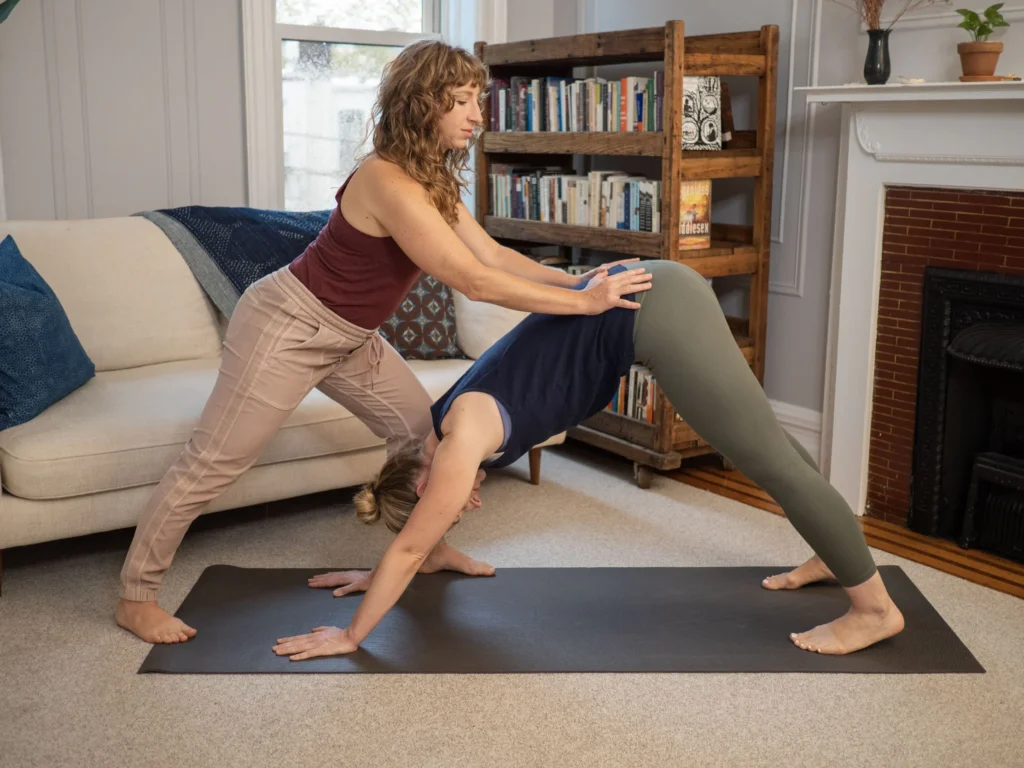
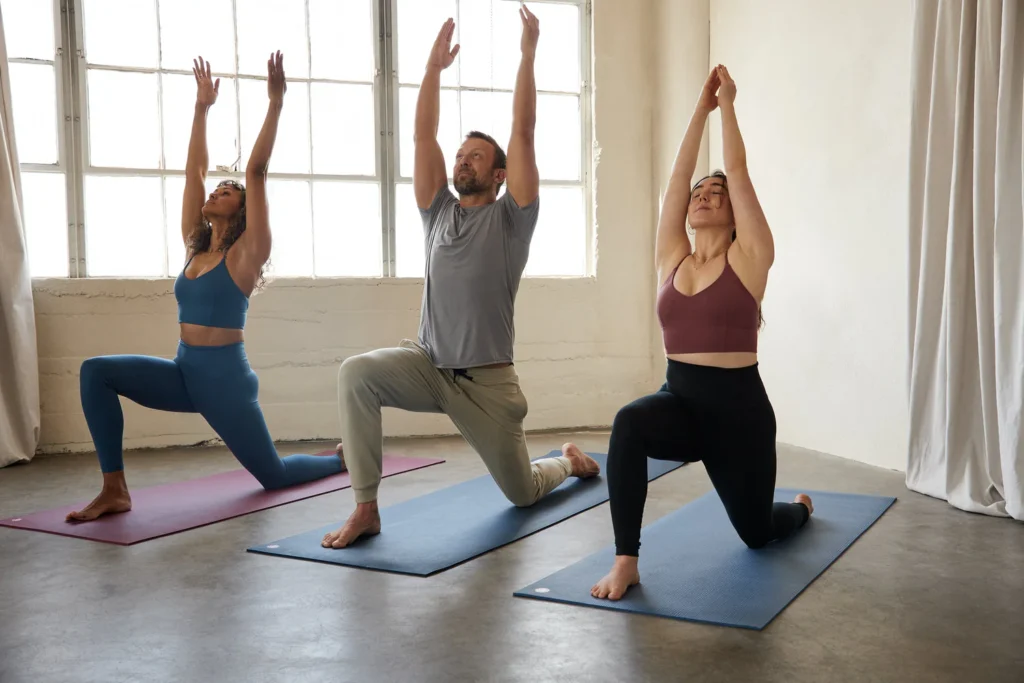
Today, Asana has evolved into the diverse physical practices we love—from dynamic Vinyasa flows to the stillness of Yin Yoga. In the context of a holistic center, Asana is the tool we use to prepare the “temple” of the body so that we can sit in stillness without the distraction of physical discomfort.
4. Pranayama: Breath Regulation
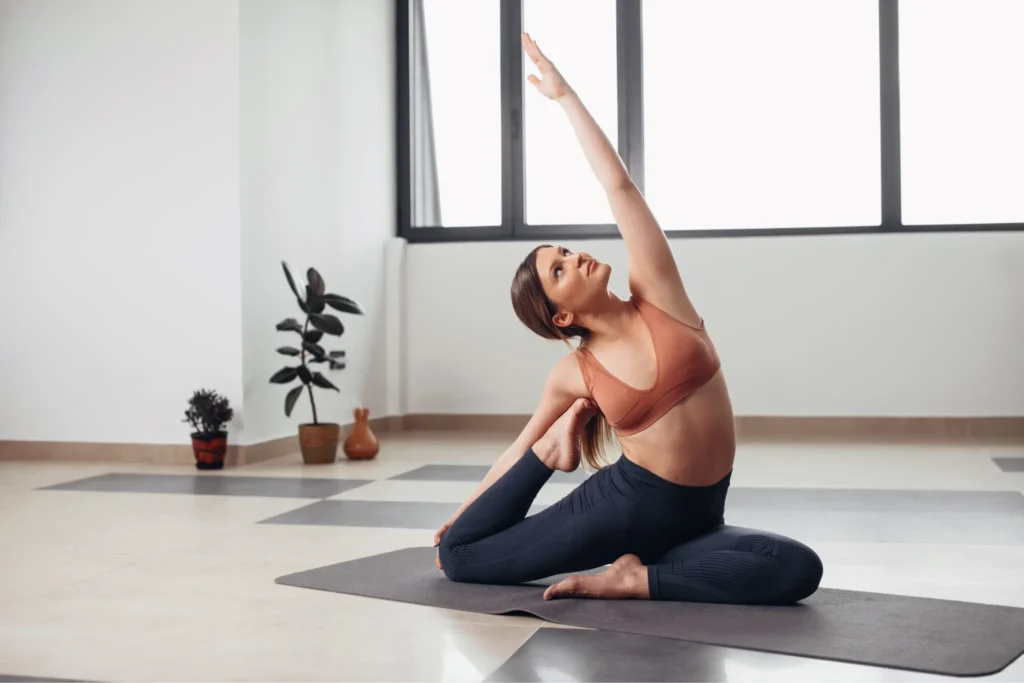
If Asana is the body, Pranayama is the bridge to the mind. Prana means life force, and ayama means to extend or draw out. By controlling the breath, we can influence our nervous system, moving from a state of “fight or flight” into “rest and digest.”
Techniques like Ujjayi (Victorious Breath) or Nadi Shodhana (Alternate Nostril Breathing) are foundational tools taught in any authentic yoga school. Mastering the breath is essential for maintaining stamina during long training hours in the humid Bali climate.
5. Pratyahara: Sensory Withdrawal
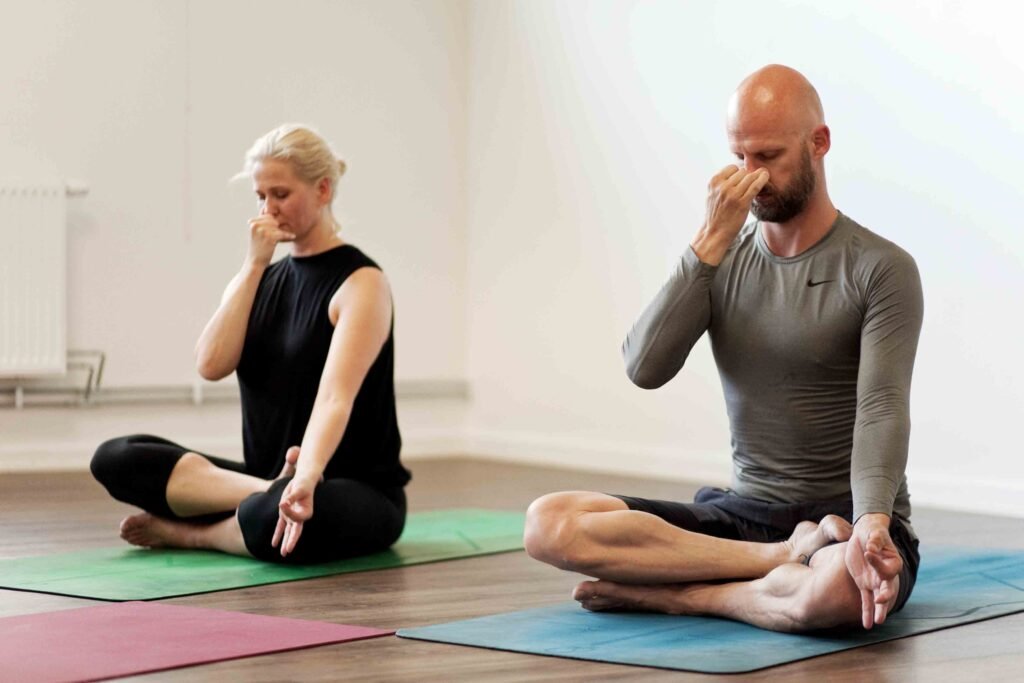
We live in a world of constant sensory input. Pratyahara is the practice of turning our attention inward. It is the bridge between the external limbs (1–4) and the internal limbs (6–8).
Imagine you are practicing in a lush Bali garden. You hear the tropical birds and feel the humidity, but through Pratyahara, you learn to acknowledge these sensations without letting them pull you away from your center. This limb is vital for developing the focus required for advanced meditation.
6. Dharana: Concentration
Once we have quieted the senses, we move toward Dharana, which is “one-pointed concentration.” This involves focusing the mind on a single object, such as a mantra, the breath, or the flame of a candle.
In our modern “multi-tasking” world, Dharana is a superpower. It is the precursor to meditation. We are training the mind to stop jumping like a “monkey” from thought to thought, tethering it to the present moment.
7. Dhyana: Meditation
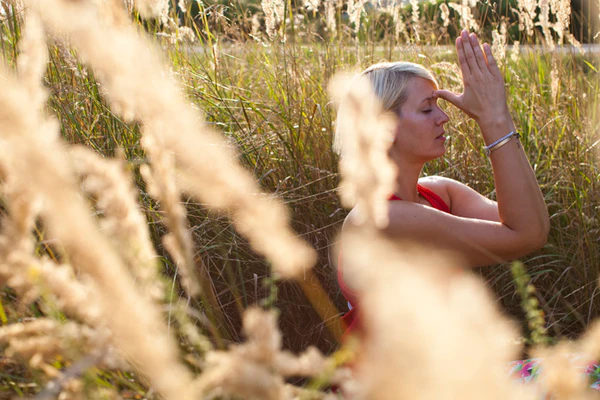
While Dharana is the act of concentrating, Dhyana is the state of being where concentration becomes effortless. It is a continuous flow of awareness.
In the state of Dhyana, the mind is quiet, and the “observer” remains present without judgment. This is the stage where many practitioners experience profound insights and emotional releases. It is a core component of the deep, transformative work we facilitate during our intensive immersions.
8. Samadhi: Bliss or Enlightenment
The final limb is Samadhi—the ultimate goal of the yogic path. It is a state of ecstasy or “oneness” where the individual self merges with the universal consciousness.
Samadhi isn’t something you “do”; it is a state of grace that arises when the previous seven limbs have been integrated. It is the realization that we are not separate from the world around us, but an intrinsic part of the whole.
Why Study the 8 Limbs in Bali?
At ADDA YOGA Bali, we believe that the environment in which you study philosophy matters. Bali is often called the “Island of the Gods” because the local culture inherently lives many of these limbs every day—from the Saucha of daily offerings to the Ishvara Pranidhana seen in village ceremonies.
When you dive into these teachings at a holistic center and school like ours, you aren’t just reading about them in a book. You are experiencing them through the community, the environment, and the guidance of experienced mentors. Whether you are exploring our professional training modules or simply attending a workshop, these eight limbs provide the map for your journey inward.
Frequently Asked Questions (FAQ)
🧘
Do I need to master Asana before learning the other limbs?
Absolutely not. The 8 Limbs are designed to be practiced simultaneously. While many start with the physical postures, you can begin practicing Yamas like non-violence or Niyamas like contentment at any stage of your journey.
8️⃣
Is the 8 Limbs of Yoga related to Ashtanga Yoga?
Yes. “Ashtanga” literally translates to “eight limbs” — ashta means eight and anga means limb. While there is a specific style of physically demanding yoga called Ashtanga Vinyasa, the term originally refers to Patanjali’s eight-fold path described above.
📚
Why are the 8 Limbs important for a Yoga Teacher Training (YTT)?
A YTT is more than just learning how to teach poses; it is about becoming a practitioner of yoga as a lifestyle. Understanding the 8 Limbs gives you the “why” behind the “what,” allowing you to share the practice with depth, authority, and authenticity.
🌿
Can I practice the 8 Limbs if I’m not religious?
Yes. The 8 Limbs are a philosophical and psychological framework for living, not a religion. They are designed to be universal and can be integrated into any belief system or secular lifestyle to improve mental clarity and emotional well-being.
✨
Which limb is the hardest to master?
This varies for everyone! For some, the physical discipline of Tapas is easy, while Aparigraha or non-attachment is a lifelong challenge. For others, sitting in Dhyana or meditation is the most difficult. The beauty of the path is that it meets you exactly where you are.
Conclusion
The 8 Limbs of Yoga offer a comprehensive guide for anyone seeking a more balanced and conscious life. By understanding that Yoga is an integrated system of ethics, physical health, breathwork, and mental mastery, you open the door to a much deeper transformation.
As you prepare to dive deep into your practice, remember that it is a journey, not a destination. Each limb supports the others, creating a sturdy foundation for your growth. We look forward to supporting your exploration of these ancient truths here in the heart of Bali.