The Significance of Melukat: A Local Practitioner’s Guide to Bali’s Water Purification Ceremony By: Wayan Sudarsana (Lead Cultural Consultant at ADDA YOGA Bali) In the heart of Bali, where the scent of incense (Dupa) mingles with the humidity of the jungle, there is a profound understanding that the soul, like the body, requires regular cleansing. At ADDA …
The Significance of Melukat: A Local Practitioner’s Guide to Bali’s Water Purification Ceremony
By: Wayan Sudarsana (Lead Cultural Consultant at ADDA YOGA Bali)
In the heart of Bali, where the scent of incense (Dupa) mingles with the humidity of the jungle, there is a profound understanding that the soul, like the body, requires regular cleansing. At ADDA YOGA Bali, we view Yoga not just as physical Asana, but as a path to Soucha (purity). To truly understand the spiritual landscape of our island, one must look toward the water.
Melukat is more than a ritual; it is a sacred technology for the soul. In this guide, we explore the deep significance of this water purification ceremony from the perspective of local lineage and spiritual practice.
What is Melukat? Understanding the Root of Purity

The word Melukat is derived from the Old Javanese word Lukat, which means to “cleanse” or “release.” In the Balinese Hindu tradition, we believe that humans are subject to Mala—spiritual impurities or “clutter” gathered through daily life, negative emotions, and past karmic imprints.
While a shower cleanses the Sekala (the visible, physical world), Melukat addresses the Niskala (the invisible, spiritual world). It is a ritual intended to achieve a state of Shanti (peace) by washing away the energetic weight that prevents us from reaching our highest potential.
The Philosophy of Tri Hita Karana
At ADDA YOGA, our teachings are rooted in Tri Hita Karana—the three causes of prosperity:
- Parhyangan: Harmony between humans and the Divine.
- Pawongan: Harmony between humans and fellow beings.
- Palemahan: Harmony between humans and nature.
Melukat is a physical manifestation of these three pillars. We use the element of water (Apah) provided by mother nature to reconnect our internal divinity with the external world.
The Elements of the Ceremony: More Than Just Water
For a Melukat ceremony to be authentic and effective, several sacred components must align. As practitioners, we do not simply “jump in a fountain.” We prepare the vessel of the self to receive the blessing.
- Holy Water (Tirta)
In Bali, water is the primary medium of the divine. However, not all water is Tirta. Holy water is “awakened” through the prayers and Mantras of a Pemangku (Priest). Whether the source is a natural spring (Pancoran), a river meeting point (Campuhan), or the sea (Segara), it is the intention and the vibration of the priest that elevates the water to a purifying force.
- Banten (Offerings)
You will notice the Canang Sari—the small, colorful palm-leaf baskets—placed at the shrines. These are not merely decorations; they are selfless gifts to the spirits. The colors represent different deities:
- White: Lord Iswara (East)
- Red: Lord Brahma (South)
- Yellow: Lord Mahadeva (West)
- Black: Lord Vishnu (North)
- The Power of Mantra
Sound is a vibration that clears the Nadis (energy channels). During Melukat, the priest chants ancient Sanskrit and Kawi mantras that resonate with the water, changing its molecular structure to better interface with your Prana (life force).
A Step-by-Step Guide to the Ritual

If you are joining us at ADDA YOGA Bali for a guided spiritual excursion, here is what you can expect during a traditional Melukat.
Preparation and Attire
Respect is the foundation of EEAT in Balinese culture. One must never enter a holy space without a Sarong and a Sash(Senteng). The sash is tied around the waist to symbolize the separation between our lower, animalistic nature and our higher, spiritual intellect.
Expert Note: If you are a woman currently on your menstrual cycle, Balinese tradition asks that you refrain from Melukat. This is not a judgment of “uncleanness,” but a recognition of the powerful downward-moving energy (Apana Vayu) present during this time, which conflicts with the upward-moving energy of the temple space.
The Prayer (Muspa)
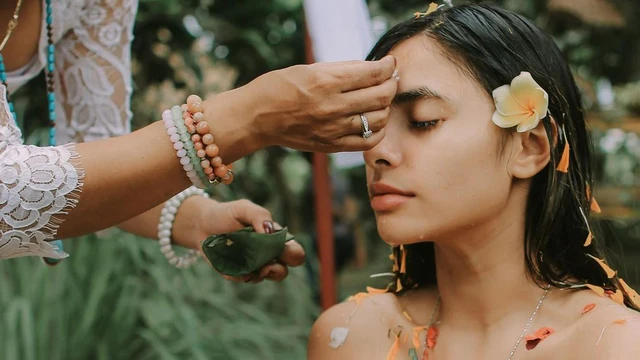
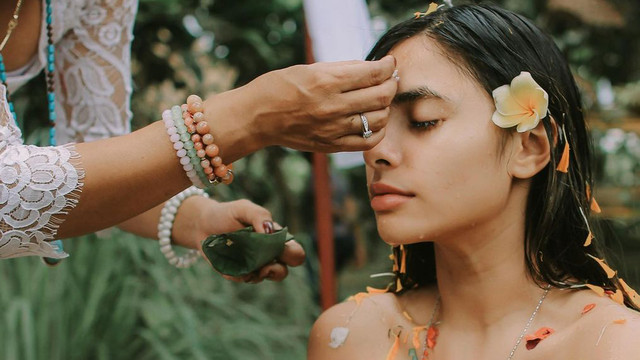
Before entering the water, we sit in meditation. We hold a flower between our fingertips, bringing it to our forehead to focus the Ajna Chakra (Third Eye). We ask for permission from the guardians of the land to cleanse our spirits.
The Immersion
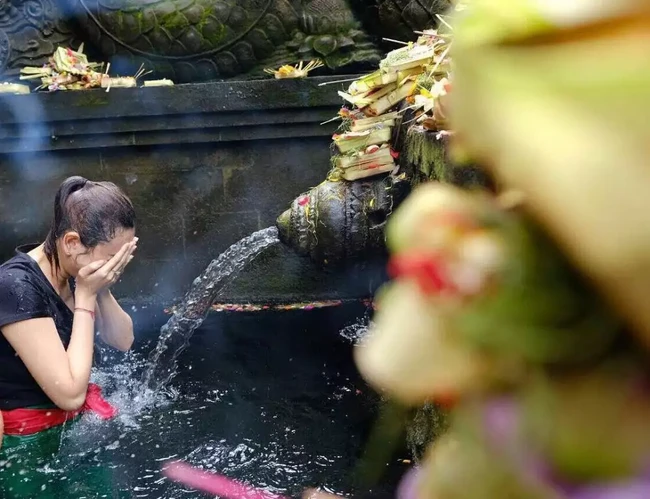
As you stand under the spout of the holy spring, the water hits the crown of your head (Sahasrara Chakra). You are encouraged to:
- Wash the face three times: To clear your vision and speech.
- Drink the water three times: To purify your internal organs and thoughts.
- Fully immerse the head: To surrender your ego to the flow of the divine.
The Spiritual Benefits: Why Every Yogi Should Experience Melukat
As practitioners of Yoga, we often find that our physical practice hits a plateau. Sometimes, the “blockage” isn’t in the hamstrings—it’s in the energetic body.
Emotional Release
Many practitioners experience an intense emotional release during Melukat. It is common to see tears or feel a sudden lightness. This is the “washing away” of Samskaras—the mental impressions or scars left by past experiences.
Realigning the Chakras
The heavy pressure of the holy spring acting on specific points of the body helps to move stagnant Prana. It acts as a form of spiritual hydrotherapy, vibrating the energy centers and bringing them back into alignment with the frequency of nature.
Cultivating Mindfulness (Smrti)
The ritual requires presence. The coldness of the water, the smell of the incense, and the sound of the priest’s bell (Genta) force you into the “Now.” This state of Dharana (concentration) is the essence of a true Yoga practice.
Choosing the Right Location: Authenticity Over Tourism
While Bali has many beautiful water temples, the “best” Melukat is one performed with the right intention and guidance.
- Tirta Empul: The most famous “Holy Spring” temple in Tampaksiring. It is a powerful site but can be crowded.
- Sebatu: A more hidden, jungle-shrouded waterfall used for Melukat Geni (fire and water purification).
- Pura Mengening: A quieter, more meditative alternative to Tirta Empul, perfect for those seeking deep silence.
At ADDA YOGA Bali, we believe in the “Local Practitioner” approach. We facilitate ceremonies that respect the temple’s capacity and ensure that the local community benefits from your visit.
Integrating Melukat into Your Yoga Journey

Melukat is the perfect complement to a week of intensive Hatha or Vinyasa practice. While Yoga builds the internal fire (Agni), Melukat provides the cooling balance of water.
How to integrate the experience:
- Pre-Ceremony: Practice a grounding Yin Yoga session to open the hips and prepare for sitting in prayer.
- Post-Ceremony: Maintain silence (Mauna) for a few hours. Let the Tirta dry naturally on your skin to absorb the blessing.
- Journaling: Write down what you felt you “left behind” in the water.
Frequently Asked Questions (FAQ)
- Is Melukat a religious conversion? No. While rooted in Balinese Hinduism, Melukat is a universal ritual of purification. People of all faiths (or no faith) are welcome, provided they approach the water with a heart full of respect and a mind full of humility.
- What should I bring? A change of dry clothes, a towel, and your own Sarong if you have one. Most importantly, bring an open heart.
- How often should one do Melukat? In Bali, we often perform Melukat during the Full Moon (Purnama) or New Moon (Tilem). For visitors, once during your stay is a powerful way to reset your energy.
Experience the Magic with ADDA YOGA Bali
Authenticity is the heartbeat of everything we do. We don’t just teach Yoga; we live the Balinese way of life. By participating in a Melukat ceremony through our studio, you are guided by local practitioners who understand the nuance, the prayers, and the profound spiritual heritage of this island.
Are you ready to release what no longer serves you? Let the holy waters of Bali guide you home to yourself.
Check our wellness and spiritual events in Bali, Canggu : Sound healing, Cacao ceremony, Kundalini activation , Reiki, Full moon ceremonies, Kirtan , breathwork , and much more !
Website: www.addayogabali.com
Contact: addaflowyoga@gmail.com
Address (Studio): Jl. Kayu Manis, Canggu, Kec. Kuta Utara, Kabupaten Badung, Bali 80351
https://addayogabali.com/contact/