Bali is the undisputed "Mecca" of modern yoga. From the bustling studios of Canggu to the serene shalas of Ubud, the island offers an endless array of Vinyasa Flow classes. Vinyasa is beautiful, creative, and accessible; it provides a wonderful entry point into the world of movement. However, for many practitioners, there comes a moment …
Bali is the undisputed “Mecca” of modern yoga. From the bustling studios of Canggu to the serene shalas of Ubud, the island offers an endless array of Vinyasa Flow classes. Vinyasa is beautiful, creative, and accessible; it provides a wonderful entry point into the world of movement. However, for many practitioners, there comes a moment when the desire for “more” arises—a desire for structure, for discipline, and for the mastery of the self.
This is where Ashtanga Yoga begins.
Ashtanga is often called the “Yoga of Eight Limbs.” It is a rigorous, scientific system of movement and breath that serves as the foundation for most modern Vinyasa styles. But unlike a creative flow, Ashtanga follows a set sequence of postures that requires precision, stamina, and a deep understanding of internal energy.
At ADDA YOGA Bali, we believe that while anyone can follow a Vinyasa class, the true depth of a traditional practice like Ashtanga is unlocked through Private Instruction. Here is why a private teacher is not just a luxury, but a necessity, for those looking to transcend the basics and master advanced yoga styles.
1. Understanding the Lineage: Parampara and Personal Guidance

In the tradition of Ashtanga, the concept of Parampara—the direct transmission of knowledge from teacher to student—is sacred. Ashtanga was not designed to be learned from a YouTube video or a large group class where the teacher is 20 feet away on a podium.
Why Private Instruction Honors Tradition
In a private setting at ADDA YOGA Bali, our expert teachers act as your personal guide through the Primary Series(known as Yoga Chikitsa or Yoga Therapy). We don’t just show you a pose; we transmit the history, the methodology, and the subtle energetic cues that have been passed down through generations. This one-on-one attention ensures that you are not just “doing yoga,” but participating in a living lineage.
2. Precision Alignment: Protecting Your Longevity

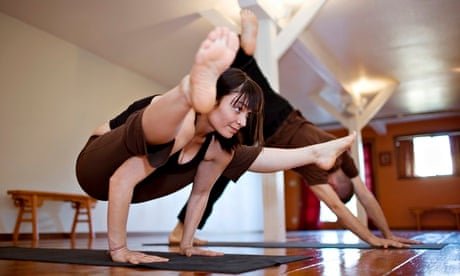
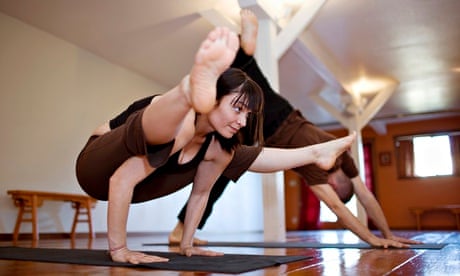
Ashtanga is physically demanding. It involves repetitive Vinyasa Krama (breath-synchronized movement), deep forward folds, and challenging arm balances. Without a private teacher’s watchful eye, it is incredibly easy to develop “micro-habits” that lead to injury over time.
The Benefit of the “Teacher’s Eye”
In a private session, your ADDA YOGA teacher monitors your Asana (postures) with surgical precision. We look for:
- Joint Stacking: Ensuring your weight is distributed safely to protect the wrists and knees.
- Spinal Integrity: Preventing the “rounding” of the back in deep folds that can lead to disc issues.
- Individual Anatomy: Every body is different. A private teacher adjusts the sequence to fit your bone structure, rather than forcing your body into a “textbook” shape.
3. Mastering the “Tristhana” (The Three Pillars)

Ashtanga is defined by the Tristhana—the three places of attention or action. Mastering these is what separates an advanced practitioner from a beginner, and they are nearly impossible to refine in a crowded group class.
A. Ujjayi Pranayama (The Breath)
Ashtanga requires a specific “Ocean Breath” that builds internal heat (Agni). A private teacher can hear your breath and help you modulate its rhythm, ensuring you are using it to fuel your movement rather than gasping for air.
B. Bandhas (Internal Energy Locks)
The Mula Bandha (root lock) and Uddiyana Bandha (lower abdominal lock) are the “secret sauce” of advanced yoga. They provide the lightness needed for “jump-throughs” and “jump-backs.” These are subtle, internal engagements that require a teacher’s verbal and physical cues to truly understand and activate.
C. Drishti (The Gaze)
In Ashtanga, every pose has a specific focal point. Whether it’s the tip of the nose or the third eye, Drishti prevents the mind from wandering. A private teacher keeps you accountable, ensuring your focus remains internal and meditative.
4. Personalized “Hands-on” Adjustments
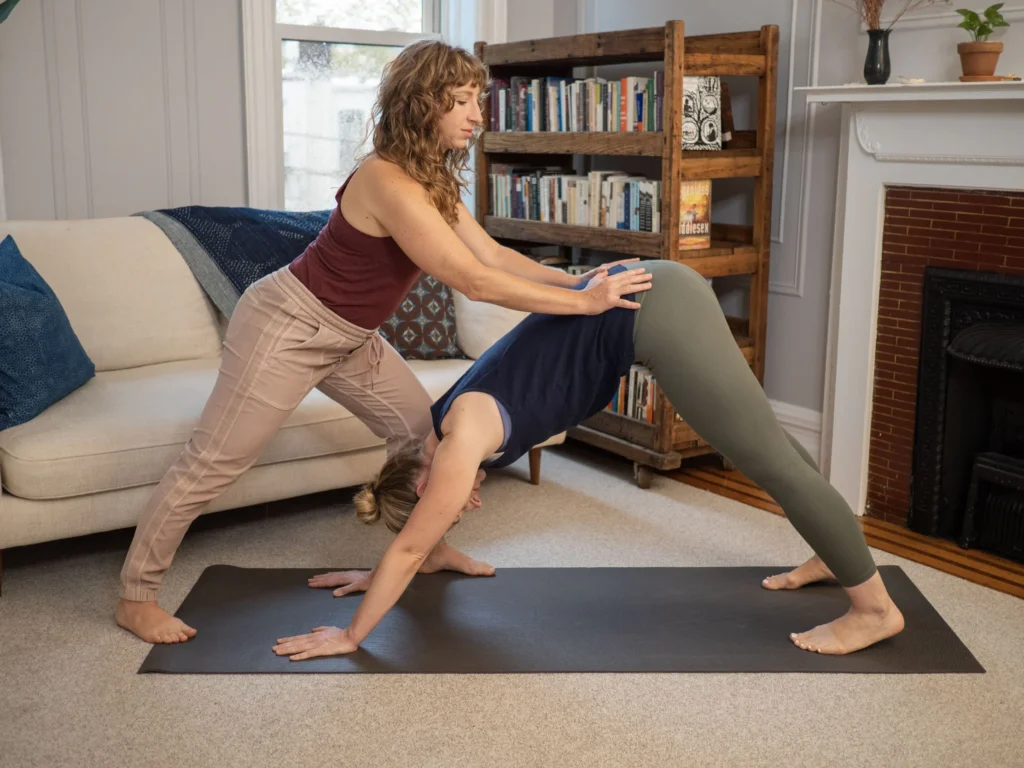
One of the hallmarks of the Mysore-style (the traditional way Ashtanga is taught) is physical adjustments. In a private session at ADDA YOGA Bali, these adjustments are tailored specifically to your level of flexibility and strength.
The Power of Touch
Safe, authoritative adjustments can help you find space in a pose that you simply couldn’t access on your own. Whether it’s finding the “bind” in Marichyasana or finding balance in Sirshasana (Headstand), a private teacher provides the physical support and confidence needed to break through mental and physical plateaus.
5. Psychological Support: Breaking the “Ego” Barrier

Advanced yoga is as much a mental challenge as it is a physical one. Ashtanga is designed to bring up resistance. There will be days when a specific pose feels impossible, or when the heat of the practice makes you want to quit.
Your Private Teacher as a Coach
At ADDA YOGA Bali, our teachers serve as your “spiritual mirror.” We know when to push you to find your edge and when to encourage you to rest. This relationship builds trust, allowing you to navigate the frustrations of an advanced practice without giving up. Having someone who knows your journey personally provides a level of accountability that a group class simply cannot offer.
6. Curated Progression: Moving Beyond the Primary Series

The beauty of a private teacher is that they know exactly when you are ready to “move on.” In traditional Ashtanga, you are given a new pose only when you have mastered the previous one.
Avoiding “The Rush”
Many students try to jump into the Intermediate Series (Nadi Shodhana) before their bodies are ready, leading to burnout. A private teacher at ADDA YOGA ensures your progression is sustainable. We help you build the foundational strength and “muscle memory” required for advanced transitions, ensuring that your progress is real and lasting, not just a fleeting accomplishment.
Why ADDA YOGA Bali is the Authority on Advanced Practice
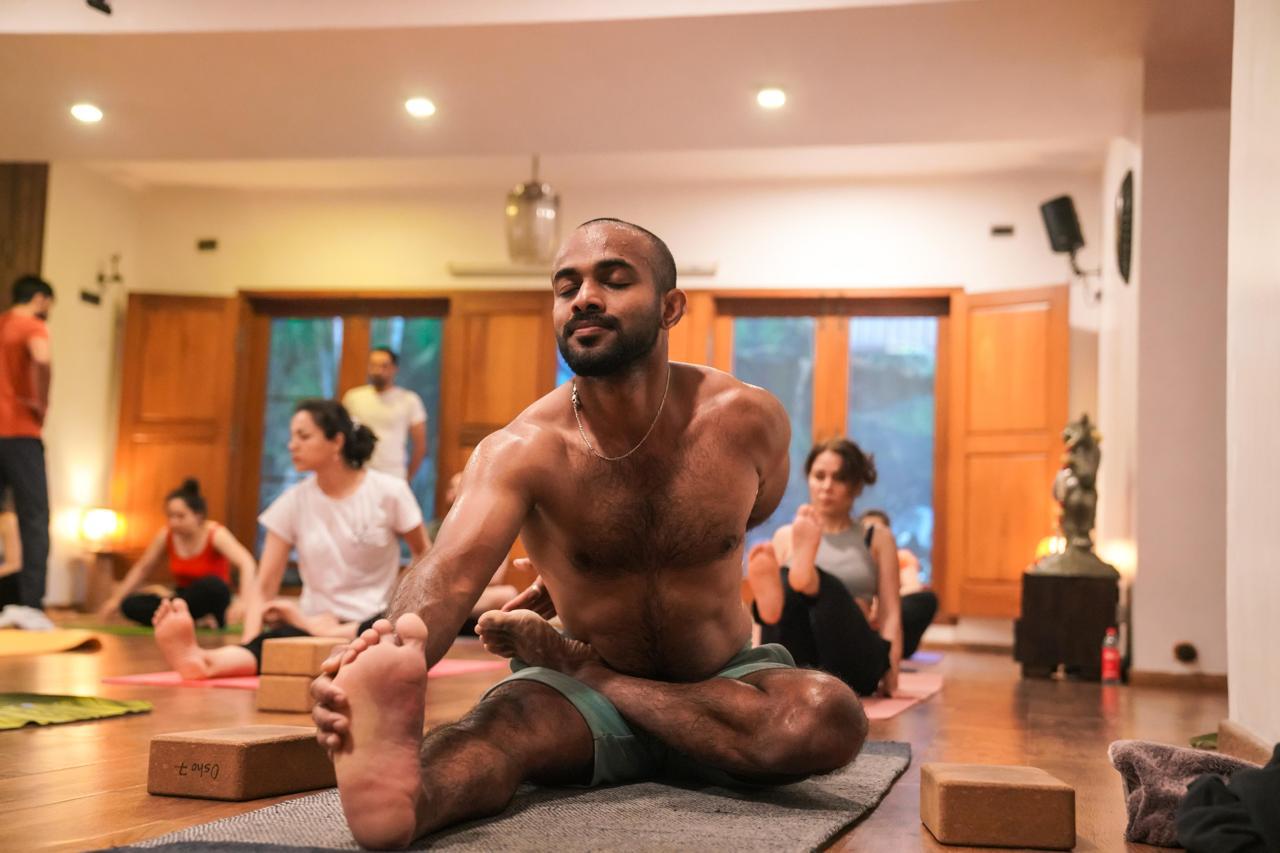
Our team at ADDA YOGA Bali consists of practitioners who have dedicated their lives to the study of traditional yoga. We don’t just “teach” Ashtanga; we live it.
By choosing a private session with us, you are accessing:
- Deep Expertise: Teachers who have studied under lineage holders in India and around the world.
- Cultural Context: We explain the Sanskrit terms and philosophical underpinnings that give the practice its soul.
- Safe Environment: A boutique setting where your safety and spiritual growth are our only priorities.
Looking for private Yoga teacher in Bali, directly to your villa ? : we serve all Bali ! Canggu, Seminyak , Ubud, Uluwatu. Sanur, Nusa Dua, Seminyak, Umalas, Seseh, Kuta Bali
Website: www.addayogabali.com
Contact: addaflowyoga@gmail.com
Address (Studio): Jl. Kayu Manis, Canggu, Kec. Kuta Utara, Kabupaten Badung, Bali 80351
Frequently Asked Questions (FAQs)

- Is Ashtanga yoga too hard for beginners? Not if learned correctly. While it is challenging, a private teacher can “modify” the sequence for a beginner, focusing on the foundational movements and breathwork. This “Vinyasa Krama” approach makes Ashtanga accessible to anyone who has the discipline to learn.
- Why is it called “Ashtanga” and not just Vinyasa? Ashtanga refers to the “Eight Limbs” of yoga described by Patanjali. While Vinyasa focuses on the creative flow between poses, Ashtanga follows a specific, set sequence of postures intended to purify the body and mind in a systematic way.
- How many times a week should I practice Ashtanga? Traditionally, Ashtanga is practiced six days a week, with rest days on Moon Days (Full/New Moon) and Saturdays. However, for those starting with a private teacher in Bali, 3 to 4 times a week is an excellent way to see significant progress.
- Can I learn Ashtanga if I am not flexible? Yes. In fact, people who are naturally “stiff” often find more success in Ashtanga because they have the stability required for the practice. Flexibility is a byproduct of the practice, not a prerequisite. A private teacher will use props and modifications to help you safely build range of motion.
- What is the difference between a private yoga class and a Mysore class? In a Mysore-style class, students practice the sequence at their own pace in a group room with a teacher providing adjustments. A Private Session is 1-on-1, where the teacher’s entire focus is on your specific practice, alignment, and progression for the full hour.
Where can I find private Ashtanga teachers in Canggu or Bali? ADDA YOGA Bali offers bespoke private Ashtanga sessions. We can host you at our studio or send our expert teachers to your private villa for a tailored, one-on-one experience.
Take Your Practice to the Next Level
The journey from a casual “flow” to a dedicated advanced practice is one of the most rewarding paths a person can take. It requires patience, breath, and the right mentorship. At ADDA YOGA Bali, we are here to provide that mentorship.