Embarking on a Yoga Teacher Training (YTT) is more than just a career move; it is a profound rite of passage. When you choose to undergo this journey in the spiritual heart of Bali, you aren’t just signing up for a course—you are stepping into a container designed for deep personal evolution.While many students focus …


Embarking on a Yoga Teacher Training (YTT) is more than just a career move; it is a profound rite of passage. When you choose to undergo this journey in the spiritual heart of Bali, you aren’t just signing up for a course—you are stepping into a container designed for deep personal evolution.
While many students focus on physical preparation—perfecting their Chaturanga or increasing flexibility—the most successful trainees understand that the real work happens internally. A YTT is an intensive immersion that challenges your physical limits, emotional boundaries, and mental constructs.
To truly reap the benefits of a transformational month, you must arrive with a clear “Sankalpa” (a heartfelt intention). Here is how to mentally navigate the weeks leading up to your arrival at ADDA YOGA Bali and prepare your mind for the shift ahead.
Understanding the “YTT Bubble”
A YTT month is often described as a “bubble.” For 200 or 300 hours, your usual distractions—work emails, social obligations, and daily chores—fade into the background. In their place is a rigorous schedule of Asana, Pranayama, anatomy, and philosophy.
This intensity is intentional. It is designed to break down old patterns (Samskaras) to make room for new growth. Preparing mentally means acknowledging that you will likely feel a range of emotions, from pure elation and “yoga high” to moments of deep fatigue or frustration. Entering the process with an open, non-judgmental mindset is your greatest asset.
1. Define Your “Sankalpa” (Intention)

In the yogic tradition, a Sankalpa is a short, positive statement that reflects your highest truth. Unlike a typical goal, such as “I want to learn to do a handstand”, a Sankalpa focuses on a state of being.
Ask yourself: Why am I doing this?
- Is it to find clarity in a career transition?
- Is it to heal a specific emotional wound?
- Is it to deepen your connection to your spiritual practice?
How to set it: Sit in a quiet space, close your eyes, and notice what word or phrase arises. It could be “I am open to change,” or “I lead with compassion.” Write this down. This intention will be your anchor when the training becomes physically or emotionally demanding.
2. Practice “Shoshin” (The Beginner’s Mind)
Whether you have been practicing for ten years or two, the most transformative students are those who arrive with Shoshin — a Zen Buddhist concept meaning “Beginner’s Mind.”
Even if you are familiar with Vinyasa flow or the alignment of Hatha postures, try to listen to the instructions as if you are hearing them for the first time. This mental humility allows you to catch subtle nuances in anatomy and philosophy that a “know-it-all” attitude might block. At ADDA YOGA, where we dive deep into structured academic methods, being a “vessel” ready to be filled is the fastest way to master the material.
3. Embrace the Concept of “Tapas”
In the Yoga Sutras, Tapas refers to the “fiery discipline” or heat required for transformation. A YTT in Bali is physically demanding. You will sweat, your muscles will ache, and you will be pushed out of your comfort zone.
Mentally prepare by reframing “discomfort” as “purification.” When you feel tired during a long afternoon lecture on the Bhagavad Gita or a sunrise meditation, remind yourself that this “heat” is what forges a strong teacher.
4. Digital Detox and Mental Space
Bali is a sensory paradise, but a YTT is an inward journey. To prepare your mind, start reducing your screen time two weeks before your flight. The mental clutter of social media can interfere with the presence required for deep study.
Consider the month a “mental sabbatical.” By clearing your digital plate, you create the “Akasha” space necessary for the new insights and realizations that inevitably surface during Breathwork or Yin Yoga sessions.
The Role of Environment: Why Bali Matters
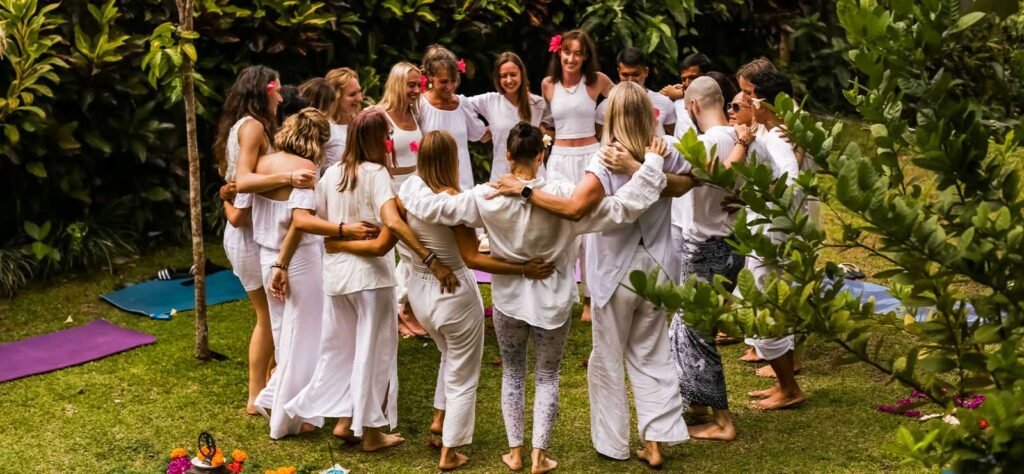
There is a reason Bali is a global epicenter for wellness. The island’s unique energy—often attributed to its volcanic soil and deep-rooted Hindu traditions—acts as an accelerator for personal growth.
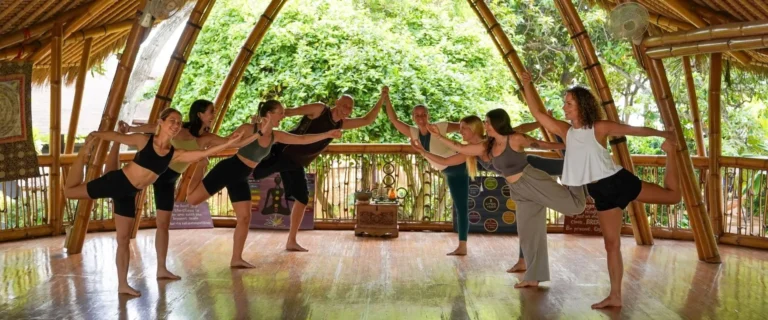
When you train at a holistic center like ADDA YOGA Bali, you are surrounded by a community of like-minded seekers. This “Sangha” community provides the safety net you need to be vulnerable. Mentally preparing for YTT involves being ready to share your journey with others. You aren’t just learning to teach; you are learning to connect.
Integrating the Subtle Body: Sound and Silence
Preparation isn’t all about study; it’s about softening. In the weeks leading up to your YTT, incorporate more silence into your day.
At many high-level training centers, including our own, Sound Healing and Vibrational Therapy are used to help integrate the day’s learning. Sound helps bypass the analytical mind and settles the nervous system. If you aren’t used to silence or meditative sound, start by sitting for 10 minutes a day with no music or distractions. This builds the “meditation muscle” you will use daily in Bali.

Practical Tips for the Final Week
- Audit Your Energy: Avoid making big life decisions or starting stressful projects right before you leave.
- Study the Basics: Familiarize yourself with the Sanskrit names of common poses. This reduces “mental friction” during the first few days of class.
- Journal: Write a letter to your “future self” that you will read on the last day of the training. Describe your current fears, hopes, and your primary Sankalpa.
Final Thoughts: Trust the Process

A Yoga Teacher Training is a journey of 1,000 miles that begins with a single, conscious breath. You don’t need to be perfect to start; you just need to be present. Bali will provide the backdrop, the teachers will provide the tools, but your intention provides the magic.
As you pack your bags and prepare for your flight to the Island of the Gods, take a deep breath and let go of expectations. The transformation you seek is already within you; the YTT is simply the key that unlocks the door.
FAQ: Preparing for Your Bali YTT
🧘
Do I need to be an “advanced” yogi to attend a YTT in Bali?
No. Expertise in yoga isn’t defined by your ability to do a headstand. It is defined by your commitment to the practice. A YTT is where you learn the “how” and “why.” As long as you have consistent personal practice and a healthy body, you are ready.
🧱
How do I handle “information overload” during the course?
This is a common concern. The best way to manage the academic load is to stay organized and use structured learning methods. Many schools, including ours, use specific pedagogical approaches to break down complex anatomy and philosophy into digestible “bricks” of knowledge.
🌴
Is Bali safe for solo travelers attending a YTT?
Absolutely. Bali, especially areas like Canggu and Ubud, is very safe for solo travelers. The yoga community here is vast and welcoming. You will likely arrive alone but leave with a global family of lifelong friends.
🌊
What is the difference between Hatha and Vinyasa YTT?
Hatha is generally slower and focuses on holding poses to build strength and mental focus. Vinyasa is more fluid, linking breath to movement in a “flow.” Most modern training in Bali offers a “Multi-style” approach, giving you a foundation in both so you can find your unique voice as a teacher.
⏳
How much “free time” will I actually have?
A YTT is an intensive program. You will typically have one day off per week. We recommend using that time for rest, light exploration of Bali’s temples, or enjoying the island’s famous healthy cafes rather than high-intensity sightseeing.
📜
Can I teach immediately after finishing a 200-hour YTT?
Yes. A 200-hour certification is the industry standard that allows you to register with Yoga Alliance and start teaching professional classes. However, most teachers consider the YTT the beginning of a lifelong journey of learning.