Practicing yoga in Bali is a rite of passage for many seekers, nomads, and travelers. There is a palpable energy here—often referred to as Sekala and Niskala (the seen and unseen worlds)—that makes a session in a tropical shala feel vastly different from a gym in London or New York. However, as Canggu continues to grow as …
Practicing yoga in Bali is a rite of passage for many seekers, nomads, and travelers. There is a palpable energy here—often referred to as Sekala and Niskala (the seen and unseen worlds)—that makes a session in a tropical shala feel vastly different from a gym in London or New York.
However, as Canggu continues to grow as a global wellness hub, the “yoga tourist” often overlooks the deep cultural roots of our island. At ADDA YOGA Bali, we believe that true Dharma (right conduct) begins with how we show up in the space. Respecting the local culture and the sanctity of the shala isn’t just about “rules”; it’s about aligning your personal practice with the collective harmony of Bali.
In this guide, we’ll walk you through the essential etiquette of practicing yoga in Canggu, from the spiritual philosophy of Tri Hita Karana to the practical “do’s and don’ts” of a modern studio.
The Foundation: Understanding Tri Hita Karana

To practice yoga respectfully in Bali, one must understand the philosophy of Tri Hita Karana. This is the traditional Balinese Hindu belief system that governs life on the island. It translates to the “Three Causes of Prosperity”:
- Parhyangan: Harmony between humans and the Divine.
- Pawongan: Harmony between fellow humans.
- Palmahan: Harmony between humans and nature.
When you enter a yoga studio like ADDA YOGA, you are stepping into a microcosm of this philosophy. Your practice is not just about your own Asana (postures); it is an act of maintaining balance between yourself, the community (Sangha), and the environment.
Arriving at the Shala: The Ritual of Preparation

In the fast-paced world of Canggu, it’s easy to rush from a brunch meeting to a yoga class. However, punctuality is a form of Satya (truthfulness/integrity).
Punctuality is Peace
Arriving 10–15 minutes early isn’t just about getting a good spot for your mat. It allows your nervous system to downshift from the “Canggu traffic” energy to a state of Pratyahara (withdrawal of the senses).
- Late Arrivals: Most studios in Bali have a strict “no late entry” policy. This is to protect the energetic “container” of the class. Entering late disrupts the opening meditation and the focused energy of fellow students.
Footwear and the Sacred Ground
In Balinese culture, the head is sacred and the feet are considered the lowest, least clean part of the body.
- The Rule: Always remove your shoes before entering the studio or the raised platform of the shala.
- The Etiquette: Place your shoes neatly. Disorganized piles of sandals at the door create “cluttered energy” for everyone entering.
Cultural Sensitivity: Modesty and Offerings

Bali is a deeply spiritual and relatively conservative society. While Canggu is very modern, the “Bikini Yoga” trend can sometimes be seen as disrespectful to local staff and the surrounding community.
Dress with Mindfulness
While you need to be comfortable and move freely, consider the “vibe” of the studio.
- Inside the Shala: Standard yoga gear (leggings, sports bras, shorts) is perfectly acceptable.
- Entering/Exiting: If you are walking through the local village or the Banjar (neighborhood center) to get to the studio, consider throwing on a light sarong or t-shirt. It shows the local Balinese community that you respect their standards of modesty.
Respecting the Canang Sari
You will notice small palm-leaf baskets filled with flowers and incense on the ground outside the studio, on altars, or even on the sidewalk. These are Canang Sari—daily offerings made by the Balinese to thank the Creator.
- The Etiquette: Watch your step. Never intentionally step over or on an offering. If you accidentally do, a quiet “sorry” or a moment of acknowledgment is appreciated.
Inside the Class: Shared Space and Energy

A yoga class is a collective experience. Your actions have a ripple effect on the person on the mat next to you.
The Phone Dilemma
In the age of social media, it’s tempting to film your Power Flow for Instagram. However, a shala is a place of Mouna(silence) and presence.
- Digital Detox: Keep your phone on “Do Not Disturb” and inside your bag. The blue light and vibration are immediate “vibe-killers” for those in a meditative state.
- Photography: If you must take a photo of the beautiful rooftop view, do it before or after class, ensuring no other students are in the frame without their permission.
Spatial Awareness
Canggu studios can get busy. Practicing Ahimsa (non-violence/kindness) means being aware of your physical footprint.
- Mat Placement: If the room is filling up, move your mat to make space for a latecomer.
- Personal Hygiene: In the Bali heat, we all sweat. However, ensure your gear is laundered. Using a yoga towel over your mat is a courtesy to the studio and the next person using the equipment.
Post-Practice: The Art of Leaving

The end of a class, specifically Savasana (corpse pose), is the most important part of the practice. It is where the body integrates the work.
Never Skip Savasana
Leaving during Savasana is considered highly disrespectful in Bali yoga culture. It signals that your schedule is more important than the collective stillness. If you must leave early for an emergency, inform the teacher before class and leave before Savasana begins.
Prop Care as Seva
Seva means selfless service. Taking care of the yoga props (blocks, bolsters, straps) is a small act of Seva.
- Cleanliness: Use the provided organic disinfectant spray to wipe down your mat and blocks.
- Order: Return your props to the shelves exactly as you found them. This helps the local Balinese staff and shows respect for the tools of your practice.
The Teacher-Student Relationship
In Bali, teachers are often viewed with great respect, echoing the traditional Guru-Shishya (teacher-disciple) relationship.
- Communication: If you have an injury or are pregnant, tell the teacher before class starts.
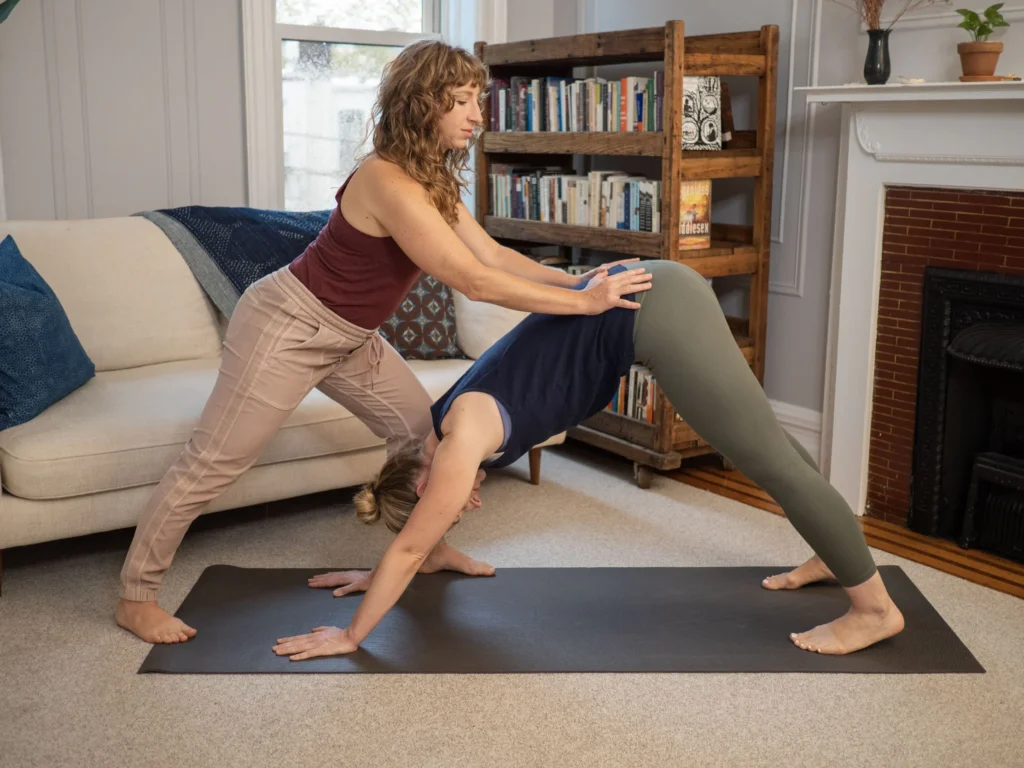
- Adjustments: If you prefer not to be touched for physical adjustments, simply let the teacher know or use a “No Adjustment” card if the studio provides them.
- Gratitude: A simple “Terima Kasih” (thank you) or a bow of the head at the end of class goes a long way in building a bridge between cultures.
Comparison: Yoga Etiquette at a Glance
| Category | The “Canggu Way” (Mindful) | The “Tourist Way” (Avoid) |
| Arrival | 10 mins early; quiet entry | Arriving as the “Om” starts |
| Footwear | Neatly placed outside the shala | Wearing shoes onto the wooden floor |
| Electronics | Phone off and in the bag | Checking notifications in Downward Dog |
| Props | Cleaned and neatly put away | Left in a heap on the floor |
| Culture | Stepping around Canang Sari | Stepping over or on offerings |
| Departure | Staying for the full Savasana | Rolling up the mat during the final rest |
FAQ: Navigating the Bali Yoga Scene
 Is it okay to talk during yoga class in Bali?
Generally, no. The shala is a space for Mouna (silence). Save the catch-ups for the ADDA Café after class. Brief, quiet questions to the teacher are usually okay, but sustained conversation disrupts the flow of others.
- Can I wear a bikini to a yoga class in Canggu?
While it’s hot, most professional studios like ADDA YOGA require standard athletic wear. More importantly, walking to and from the studio in just a bikini can be seen as disrespectful to the local Balinese families living in the neighborhood.
- What does “Namaste” actually mean when the teacher says it?
“Namaste” translates to “The divine light in me bows to the divine light in you.” It is a beautiful way to acknowledge our shared humanity at the end of a practice. In Bali, you might also hear “Om Shanti Shanti Shanti Om,” which is a prayer for peace.
- Do I need to bring my own mat to ADDA YOGA?
Most studios in Bali provide high-quality mats. However, for hygiene and “grip” during sweaty sessions, many students bring their own yoga towel. If you use a studio mat, the etiquette is to spray and wipe it down thoroughly afterward.
- How much should I tip my yoga teacher in Bali?
Tipping teachers isn’t a standard requirement in Bali, as many are international guest teachers or highly paid locals. However, if you are doing a private session or a specialized workshop, a small tip or a heartfelt “Terima Kasih” to the Balinese studio staff (who keep the space clean) is a wonderful gesture of Pawongan (harmony between humans).
Your Journey Toward Mindful Practice

Practicing yoga at ADDA YOGA Bali is an opportunity to go beyond the physical. By adopting these small shifts in etiquette, you aren’t just “doing yoga”—you are living it. You are contributing to the preservation of Bali’s unique spirit and ensuring that our community remains a sanctuary for everyone.
Check our wellness and spiritual events in Bali, Canggu : Sound healing, Cacao ceremony, Kundalini activation , Reiki, Full moon ceremonies, Kirtan , breathwork , and much more !
Website: www.addayogabali.com
Contact: addaflowyoga@gmail.com
Address (Studio): Jl. Kayu Manis, Canggu, Kec. Kuta Utara, Kabupaten Badung, Bali 80351