Embarking on a Yoga Teacher Training (YTT) is a profound milestone in any practitioner’s journey. It is a transition from being a student of the mat to becoming a steward of the practice. However, many aspiring teachers arrive in Bali—the global heart of wellness—ready to master the "peak poses" without first addressing the biological architecture …
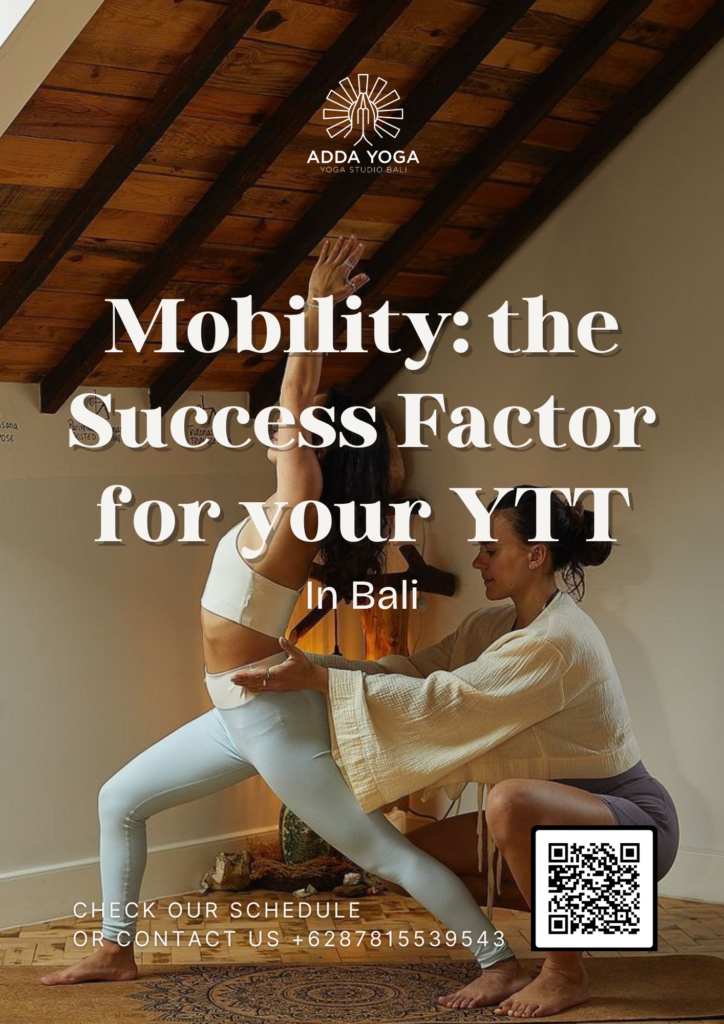
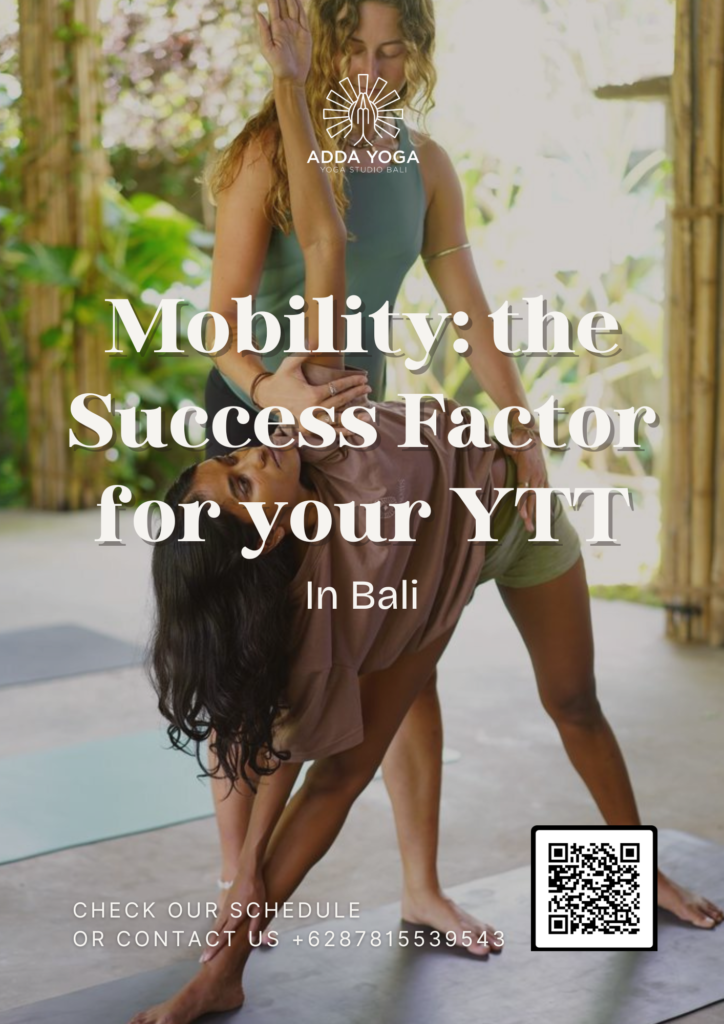
Embarking on a Yoga Teacher Training (YTT) is a profound milestone in any practitioner’s journey. It is a transition from being a student of the mat to becoming a steward of the practice. However, many aspiring teachers arrive in Bali—the global heart of wellness—ready to master the “peak poses” without first addressing the biological architecture of their own bodies.
At ADDA YOGA Bali, we have observed that the most successful trainees aren’t necessarily the most flexible; they are the ones who have consolidated their mobility before the intensive training begins.
Flexibility vs. Mobility: The Crucial Distinction
In the wellness industry, these two terms are often used interchangeably, but in the context of sports science and yoga anatomy, they are worlds apart.
- Flexibility: This is a passive attribute. It is the ability of your soft tissue, muscles, to stretch to a certain length. Think of a rubber band being pulled by an external force.
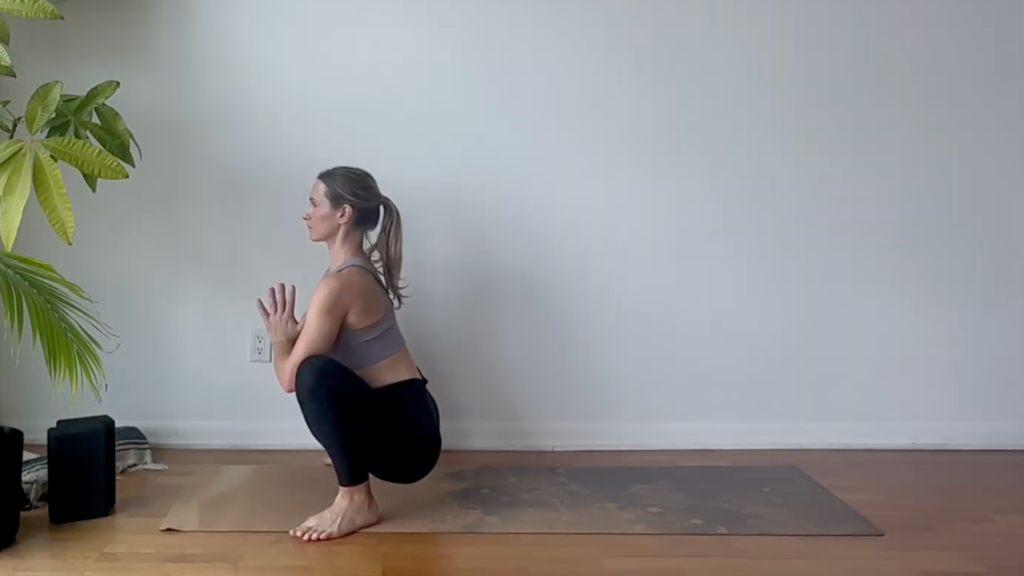
- Mobility: This is an active attribute. It is the ability of a joint to move through its full range of motion with control and strength.
If you have high flexibility but low mobility, you are at a higher risk of injury. You may be able to “dump” into a deep Hanumanasana, Splits, but if you cannot control the descent or find strength in the end-range, your ligaments and tendons are bearing the weight that your muscles should be managing.
Consolidating your mobility ensures that your joints are stable and supported before you begin the high-repetition environment of a 200-hour or 300-hour YTT.
The Anatomy of a Bali YTT Intensive

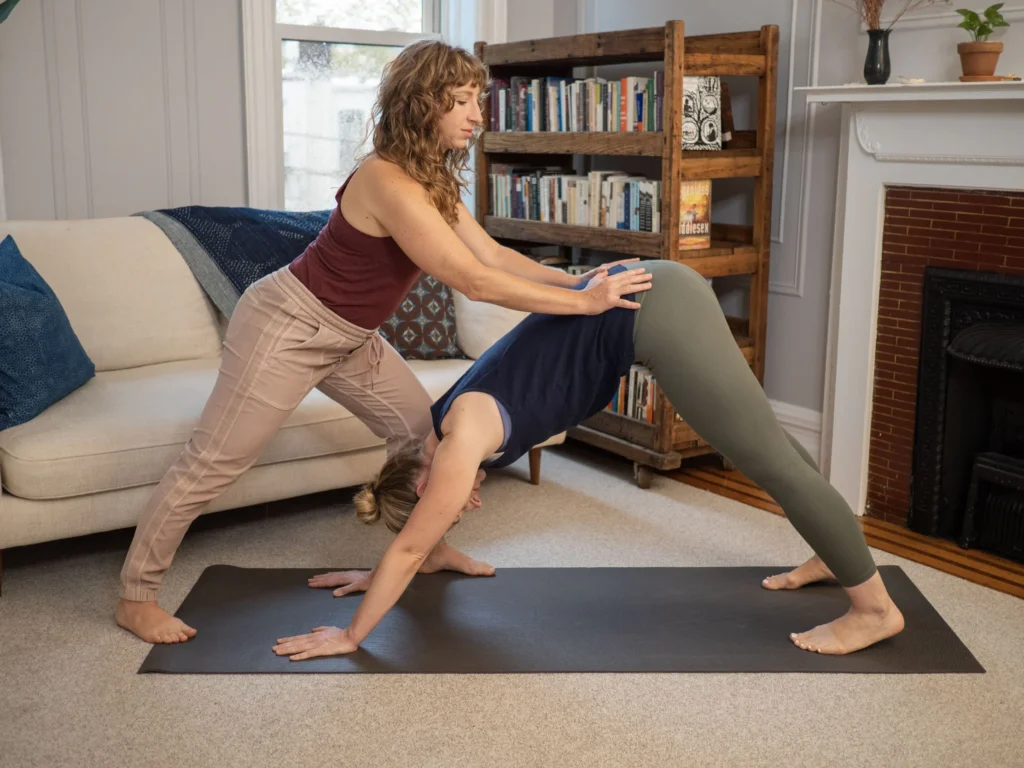
A Yoga Teacher Training in Bali is physically demanding. You are often practicing for several hours a day, engaging in back-to-back Asana clinics, and learning manual adjustments.
1. The Kinetic Chain and Repetitive Stress
During a YTT, you will perform hundreds of Chaturangas and Sun Salutations. If your shoulder mobility is restricted, your body will compensate by over-arching the lumbar spine or “pinching” the rotator cuff. By consolidating your mobility beforehand, you ensure that each joint in the kinetic chain — from the ankles to the cervical spine — is playing its part.
2. Neuro-Muscular Coordination
Mobility training is as much about the brain as it is about the body. It builds proprioception, your body’s ability to sense its location in space. When you stand at the front of a class at a holistic center like ADDA YOGA, your students will look to your alignment as the gold standard. Developing this “body intelligence” early allows you to focus on the philosophy and pedagogy of the course rather than struggling with physical discomfort.
Key Areas to Target Before Your Training

The Hips: The Gateway to Asana
Bali’s tropical heat makes the muscles feel “looser,” but the underlying joint capsule still requires functional strength. Focus on CARs, Controlled Articular Rotations, for the hips. This ensures the femur can rotate freely in the acetabulum, protecting your knees during seated meditation and your lower back during deep twists.
The Thoracic Spine: The Heart of the Backbend
Many students struggle with “crunching” in the lower back during Urdhva Dhanurasana, Wheel Pose. This is often due to a lack of mobility in the thoracic spine, the middle back. Consolidating this area allows for a graceful, even curve that protects the vulnerable lumbar discs.
The Wrists and Ankles: The Foundation
As a teacher, you will spend a significant amount of time on your hands. Strengthening the wrist extensors and improving ankle dorsiflexion, the ability to pull the toes toward the shin, provides the necessary “shocks” for your body during weight-bearing poses.
Moving with Intent: The ADDA YOGA Approach
At ADDA YOGA Bali, our “LEGO Method” of teacher training treats anatomy as the essential building blocks of the practice. We don’t just teach you where the muscles are; we teach you how they move in harmony.
When you consolidate your mobility before arriving at our school, you arrive with a “primed” nervous system. You aren’t just stretching; you are building a resilient, functional vessel that can withstand the rigors of a professional teaching career. This preparation allows the subtle aspects of the practice—the Pranayama, the Mantra, and the Energy Work—to take root more deeply.
Get ready for your YTT the right way with ADDA Yoga, contact us today at +62 878 1553 9543!
FAQ: Anatomical Readiness for YTT
🤸
Do I need to be “flexible” to start a Yoga Teacher Training?
No. Flexibility is a byproduct of the practice, not a prerequisite. However, having a baseline of functional mobility is highly recommended to prevent injuries during the intensive physical hours of the course.
📅
How long before my YTT should I start mobility work?
Ideally, you should start focusing on joint health and active range of motion at least 3 to 6 months before your start date. This gives your connective tissues time to adapt and strengthen.
🩹
What is the most common injury during YTT?
The most common complaints are wrist strain and “Yoga Butt”, also known as proximal hamstring tendinopathy. Both are usually caused by repetitive stress combined with a lack of functional strength in the surrounding stabilizing muscles.
💻
Can I do mobility training if I have a desk job?
Absolutely. In fact, it is essential. Desk-bound professionals often have shortened hip flexors and locked thoracic spines. Focusing on mobility before your YTT will help undo the postural habits of office work, making your transition into full-time yoga study much smoother.
🧘
Is mobility training the same as Yin Yoga?
Not quite. While Yin Yoga targets the fascia and connective tissues through long-held, passive stretches, mobility training involves active engagement and movement within those ranges. Both are beneficial, but mobility is what provides the strength-within-stretch required for active yoga styles like Vinyasa or Ashtanga.
Preparing for the Journey Ahead
A YTT is a marathon, not a sprint. By prioritizing your anatomy and mobility today, you are ensuring that your future career as a teacher is built on a stable, pain-free foundation.
If you are currently preparing for your journey, consider incorporating 15 minutes of joint rotations and active end-range holds into your daily routine. Your body — and your future students — will thank you.
Elevate Your Education: At ADDA YOGA Bali, we bridge the gap between traditional wisdom and modern movement science. Whether you are looking for a deep-dive workshop or a comprehensive Teacher Training, our Canggu-based holistic center is designed to support your evolution.
Contact us at +62 878 1553 9543
and start building your foundation with us.